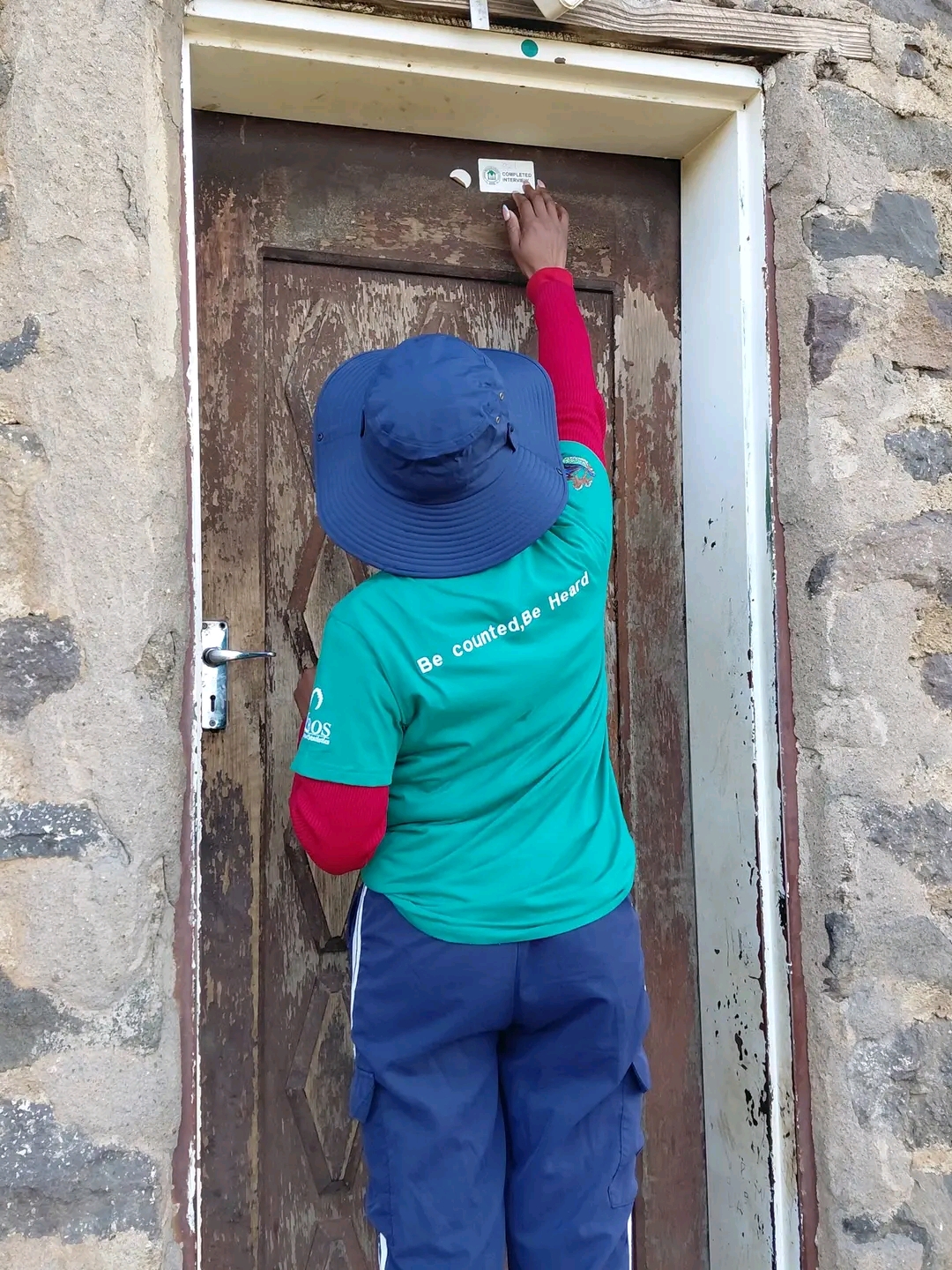
Picture Cred: LHPC 2026
More than a month has passed since Lesotho's 2026 Housing and Population Census ended. About 80 percent of the enumerators who walked every street, knocked on every door, and counted every Mosotho in this country have still not received their pay. These are not numbers on a spreadsheet. These are real people who are now struggling to eat, cover rent, and explain to their families why a government job left them broke.
This is not just a payroll failure. In the entire history of Lesotho's census, dating back to 1875, this is the first time the payment of enumerators has become this complicated. Over 150 years of census history, and it took 2026 to break that record. Not in a good way.
The mental weight these workers carried in the field was already heavy. They went door to door in harsh weather, sometimes in areas far from home, with no mental health support of any kind. But that burden has now followed them off the field. Some are being dragged on social mmedia for failing to pay their debts because they borrowed money to survive while waiting to be paid. They went into debt to do a government job, and now they are being publicly shamed for it.
What made things worse is that many enumerators were deployed to constituencies outside their home areas without any allowance for rent or transport. They paid for accommodation and daily expenses out of their own pockets, trusting they would be reimbursed. Some have since been locked out by landlords who want unpaid rent. Some are struggling to feed their children. These are people who worked hard, under pressure, in harsh weather conditions and they are being treated as if they never did their part.
Looking at how this census was carried out from the start, it is hard not to ask whether it was properly prepared for at all. It was supposed to begin on 12 April but started three weeks late. And in a country proudly moving toward e-government, from online ID applications to digital bursary processes, it is surprising that census relied almost entirely on manual systems. Contracts were signed by hand. Workers clocked- in on a paper. This led to some of those contracts and identity documents to go missing. This is not just poor planning. It is a system that left workers with no paper trail to prove they were ever employed.
To make things even more difficult, some enumerators were not on the Minister's official hiring list. When people on the list did not report for duty on stipulated time-frame, the Bureau of Statistics called in replacements and put them to work. These workers clocked in. They were given tools. They did the work. But now, when payment is due, the Minister claims to have no knowledge of them. How does a government office issue equipment to someone, accept their labour for weeks, and then deny knowing them at payday? Could this stunts be a sign that the money to pay these workers is simply no longer there?
The silence from donors and development partners who funded this census is equally troubling. If international funds were used to run this census, those partners have a responsibility to ask what happened to the money meant for the workers who made it possible.
This is not a legal grey area either. Lesotho's Labour Code Order No. 24 of 1992 is clear that workers must be paid for work done, on time and in full. Withholding wages is a violation of domestic law. Internationally, Lesotho is bound by the International Labour Organisation's Convention No. 95 on the Protection of Wages, which it has ratified. That convention explicitly prohibits delays in wage payment and requires governments to take enforcement action when wages are withheld. Lesotho is also a subscribing member of the ILO's Decent Work Agenda, which places fair and timely pay at its very centre. These are not suggestions but they are legal obligations.
The government must act. The Bureau of Statistics and the relevant ministries must urgently verify the records of all enumerators, from those on the official list and those brought in as replacements and pay them without any further delay. Workers cannot be punished for administrative failures that were never their fault.
These men and women served their country. They gave weeks of their lives to one of the most consequential national exercises a government can carry out. The data they collected will shape budget decisions, school placements, health planning, and infrastructure for years to come. The least they deserve is to be paid for collecting it.
Lesotho cannot claim to be building a capable, modern state while abandoning the very people who helped build its foundation. Pay them Now.


💬 Comments
0No comments yet. Be the first to share your thoughts!
Leave a Comment