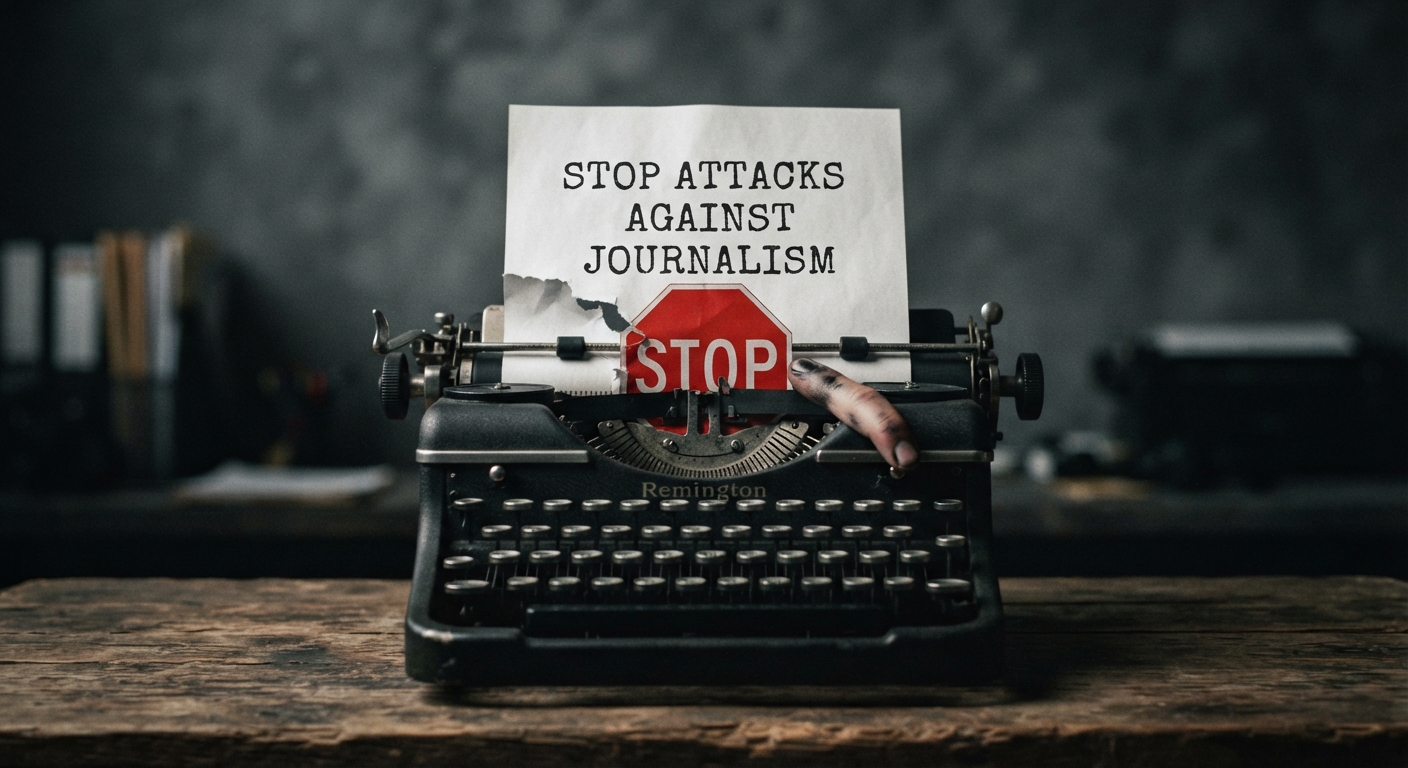
The Basotho Media Development Association (BMDA) condemns, in the strongest terms, the vandalism and deliberate destruction of broadcasting equipment and furniture at KEL Radio Station in Maseru over the weekend. The motive behind the attack and those responsible have not yet been established, but that uncertainty changes nothing about how seriously it must be treated. An attack on the infrastructure that carries a community's news, debate and emergency information is an attack on that community's right to be informed, not a matter of replaceable property.
BMDA is concerned that this incident does not stand alone. It lands on top of a year in which the tools used against Lesotho's journalists have moved from legal pressure to physical destruction, each step making the next easier to justify. In August 2025, Mohalenyane Phakela, news editor of the Lesotho Times and Sunday Express, was arrested by the Directorate on Corruption and Economic Offences and detained overnight, his phone confiscated, hours after his newspaper published a story on the alleged theft of donated televisions by a Lesotho Correctional Service official. No credible account has ever suggested Phakela committed a crime beyond publishing an uncomfortable fact. What his arrest established, instead, was a precedent: that state power can be turned against a journalist the same night an inconvenient story runs, with no real cost to whoever gives that order. Add to that the still unresolved 2023 murder of radio presenter Ralikonelo Joki, gunned down outside his Maseru workplace after receiving death threats over a corruption story, and a pattern comes into focus that BMDA can no longer describe as a string of coincidences.
This is the normalisation of impunity, and it deserves to be named as exactly that. Each unanswered case, whether it is a journalist arrested on the strength of a story rather than a crime, a killing that has produced no conviction in three years, or now a radio station's equipment smashed with no one yet held to account, teaches the same lesson to anyone weighing whether to move against the press: that there will be no real answer. That is not a slow drift. It is a pattern hardening into policy, one silence at a time.
Lesotho's experience is not happening in a vacuum. Reporters Without Borders recorded Lesotho falling from position 67 in 2023 to position 122 in its World Press Freedom Index, one of the steepest declines anywhere in the region. The International Press Institute documented close to 100 cases of threats and physical attacks against journalists across twenty two sub-Saharan African countries between April and June 2026 alone, with police and state security forces identified as the primary perpetrators in more than half of those cases. MISA's sixth regional press freedom report, launched this year in Lusaka, points to weaponised legislation, digital surveillance and a widening safety crisis for journalists across all eleven countries it monitors. Lesotho is no longer an outlier against that regional backdrop. It is beginning to look like a case study in it.
BMDA stands with the management and staff of KEL Radio as they work to restore their operations, and we align ourselves with MISA Lesotho's call for a thorough, independent and transparent police investigation into the vandalism. We welcome the concern shown by the Minister of Information, Communication, Science, Technology and Innovation following her visit to the station, but a visit and a statement of concern are not the same as accountability, and Lesotho's recent history shows how easily the first two can arrive without the third ever following.
We call on the Lesotho Mounted Police Service to complete a transparent investigation into the KEL Radio vandalism and to make its findings public. We call on the Government of Lesotho to explain, clearly and without delay, why the Phakela case was pursued as a criminal matter rather than referred to ordinary press complaint channels, and to close the case against him if no genuine offence exists. We call on the Lesotho Human Rights Commission and the African Commission on Human and Peoples' Rights to treat the combination of these incidents as evidence of a deteriorating environment for journalists and to press the government publicly for answers. And we call on media houses, press councils and human rights organisations across Lesotho and the wider Southern African region to treat the protection of media infrastructure and media workers as a shared, urgent responsibility, because a station silenced by vandalism and a journalist silenced by arrest are two versions of the same threat.
Lesotho is at a point where the choices made in the coming weeks will decide whether attacks on journalists and media infrastructure continue to harden into policy by default, or whether this moment becomes the point where accountability finally caught up with impunity. BMDA urges every institution with the power to act to choose the latter, before it is too late to choose at all.
💬 Comments
0No comments yet. Be the first to share your thoughts!
Leave a Comment